
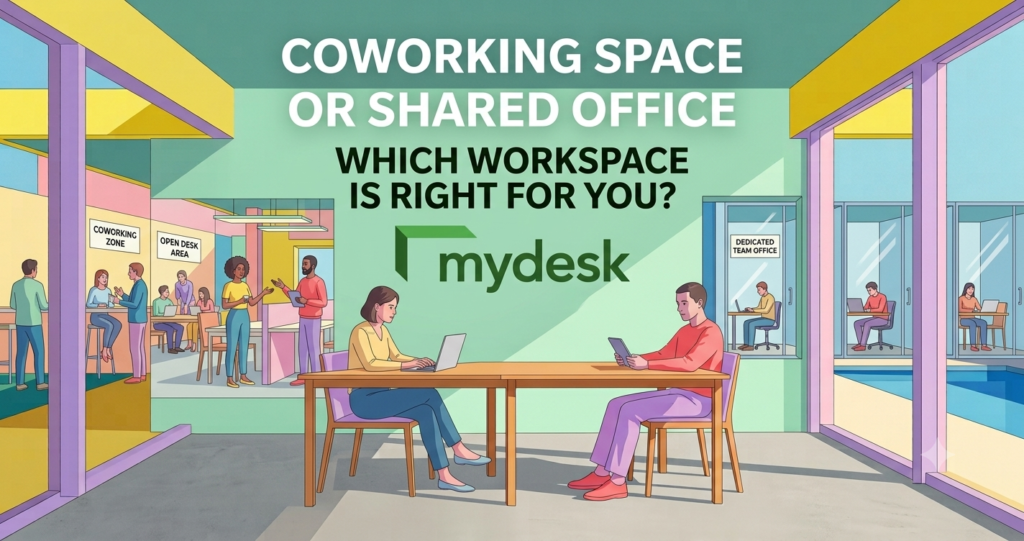
The way we work has changed — and so has the workspace. Maybe you’re a freelancer looking for a reliable desk. Maybe you’re a startup ready to move out of the kitchen table. Or maybe you’re a growing company exploring flexible office spaces. Either way, understanding the difference between shared offices and coworking spaces is essential.
This guide breaks down both options clearly. It covers the benefits, the disadvantages of shared setups, and how to make the right call for your situation.
What Is a Shared Office Space?
A shared office space is a professional environment where people from different companies or backgrounds work under the same roof, sharing common infrastructure like meeting rooms, reception areas, and utilities. Unlike a traditional office where everyone works for the same company, a shared workspace brings together individuals and teams from various industries who each rent a portion of the overall office space.
This model is particularly popular among small teams and smaller businesses that need a professional office environment without the cost and commitment of a standalone lease. It offers a middle ground between working from home and renting a large office — giving you the structure of a proper workspace without the overhead.
What Is a Coworking Space and How Does It Differ?
A coworking space takes the shared office concept further by adding a community layer. It’s designed around the idea that people from different businesses and backgrounds work better when they work alongside each other — sharing not just infrastructure but ideas, energy, and networking opportunities. The layout of a coworking space is typically open-plan, with a mix of hot desks, dedicated workstations, private office pods, and collaborative environments.
The key distinction is culture. A co-working space is intentionally designed to foster creativity and collaboration, with a vibrant community of like-minded professionals who may come from various industries but share an entrepreneurial mindset. Shared offices tend to be quieter and more segmented; coworking spaces tend to be dynamic and deliberately social.
What Are the Main Benefits of Coworking Spaces?
The benefits of coworking go well beyond having a desk to sit at. The most immediate advantage is flexibility — most coworking spaces operate on flexible terms, with options ranging from a day pass to a monthly membership, meaning you never pay for more workspace than you actually need. This is a lifeline for freelancers and small businesses whose workload fluctuates month to month.
Beyond flexibility, access to amenities is a major draw. Well-designed coworking spaces offer high-speed internet, equipped meeting rooms, lounge areas, printing facilities, and kitchen access — all included in a single membership fee.
For a startup or freelancer who would otherwise have to source and pay for each of these separately, the all-in-one model is both simpler and more cost-effective.
What Are the Disadvantages of Shared Office Environments?
No workspace solution is perfect, and it’s worth understanding the disadvantages of shared setups before committing. The most commonly cited issue is noise and interruption — open-plan environments with people from different companies can be distracting, especially for deep-focus work that requires long, unbroken concentration.
Privacy is another consideration. If your work involves confidential client calls or sensitive business discussions, a shared space without adequate private office options can become a problem.
It’s worth checking whether your workspace has bookable private rooms or soundproofed meeting rooms. Don’t just assume the open floor will accommodate every type of work.
Are Shared Offices Right for Small Teams and Startups?
For a startup or small team of two to ten people, shared offices strike a great balance between professionalism and affordability.
You get a real office setup — a business address, reception services, and meeting rooms. And you don’t have to commit to a long-term lease on space you might soon outgrow. Better yet, you can scale your desk count up or down as your team changes. That kind of flexibility is something large companies stuck in fixed offices simply can’t match.
Small businesses also benefit from working alongside other ambitious teams. Even in a more segmented shared office, the proximity to people from different companies and various industries creates informal networking opportunities that wouldn’t exist if your team was isolated in their own building. Collaboration doesn’t always need to be structured — sometimes the most valuable connections happen over coffee in a shared kitchen.
What Workspace Solutions Do Virtual Offices Offer?
Not every business needs a physical desk — some just need a credible presence. Virtual offices sit at the lighter end of the workspace solutions spectrum, providing a professional business address, mail handling, and access to meeting rooms on an on-demand basis without any permanent physical commitment. They’re particularly useful for freelancers who work primarily from home but need a professional front for client communications.
Virtual offices can also be a smart stepping stone. A freelancer or early-stage startup might start with a virtual office. This gives them a business address and occasional meeting room access. As their business grows, they can graduate to a hot desk or dedicated workspace.
Many of the best coworking spaces offer virtual office tiers precisely because they understand how workspace needs evolve.
How Do Coworking Spaces Enhance Productivity?
A well-designed coworking space is built to enhance productivity in ways that home offices and coffee shops simply can’t match. The work environment itself signals to your brain that it’s time to focus. Being surrounded by like-minded people working purposefully creates a positive social pressure. Most people find this genuinely motivating.
Access to fast internet, reliable power, ergonomic furniture, and professional meeting rooms removes the friction that derails productive days. There’s no waiting for a café table, no slow connection, no uncomfortable chair.
Flexible coworking spaces are purpose-built for people who take their work seriously. That intentionality shows in the output of the people who use them.
What Should You Look for When Finding the Perfect Workspace?
Finding the perfect workspace starts with honest self-assessment. How many days a week do you need a desk? Do you require a private office for calls, or is an open collaborative environment better for your style of work? Do you need regular access to meeting rooms, or do you meet clients off-site? Answering these questions will quickly narrow your options.
Once you have a shortlist, visit each space in person during peak hours. Check the noise level, test the internet speed, and get a feel for the sense of community among existing members. The right workspace isn’t just about the paper options. It’s about whether the people and energy in the room match how you work best.
How Does MyDesk Serve Freelancers and Businesses in Karachi?
MyDesk in PECHS Block 6, Karachi, is a modern co-working space built specifically for freelancers, remote workers, and early-stage startups who want a professional, productive workspace without a large financial commitment. It brings together the best elements of shared offices and coworking — a professional office environment, collaborative work culture, and transparent, affordable pricing.
MyDesk offers an open desk at PKR 20,000 a month. A dedicated desk costs PKR 30,000 a month. There’s also a day pass for just PKR 2,000. This makes quality workspace accessible at every stage of your professional journey.
It’s a shared space built around how independent professionals actually work. That makes MyDesk one of the most practical office space choices in Karachi today.
Key Things to Remember
- Shared offices and coworking spaces both offer flexible alternatives to a traditional office, but coworking adds a stronger community and collaboration layer.
- Benefits of coworking include flexible terms, access to amenities, meeting rooms, high-speed internet, and networking opportunities with people from various industries.
- Disadvantages of shared environments include potential noise, interruption, and limited privacy — mitigated by spaces that offer private office or bookable room options.
- Virtual offices are a cost-effective workspace solution for freelancers and startups who need a business address without a physical desk.
- Small teams and startups are particularly well-served by shared offices — professional infrastructure, flexible lease terms, and the chance to work alongside like-minded individuals.
- Finding the perfect workspace means matching your working style, desk needs, and budget to the right space — always visit before committing.
- MyDesk in PECHS, Karachi, offers open desks from PKR 20,000/month, dedicated desks at PKR 30,000/month, and day passes from PKR 2,000 — a flexible, affordable workspace built for freelancers and growing businesses.